Your First Prenatal Visit: What to Expect and What to Ask

Your first prenatal appointment is a major milestone in your pregnancy journey. Learn when to schedule it, what happens during the exam, and which questions you should ask your OB-GYN.
first-trimester 8 min read
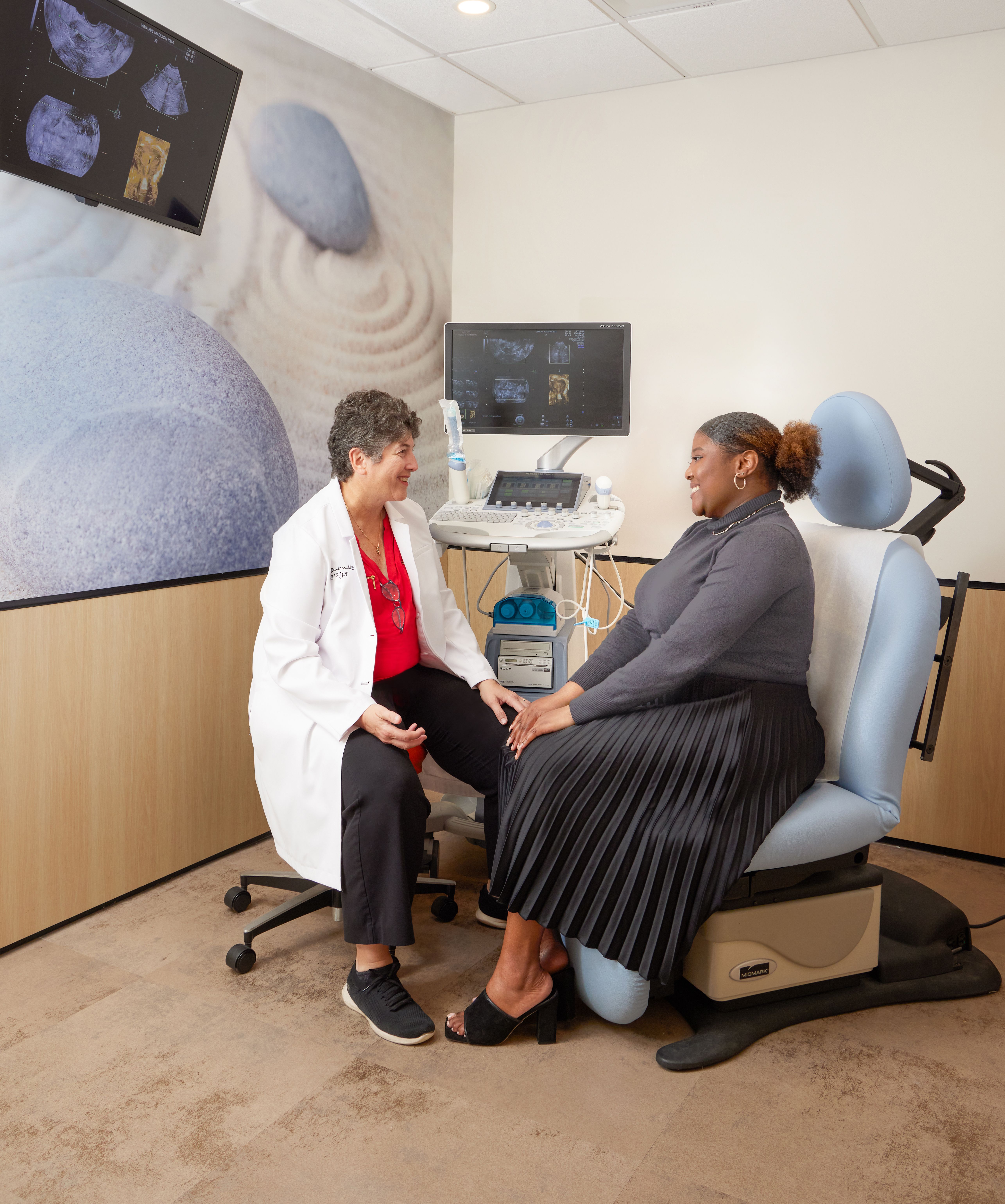
Pregnant patient meeting with healthcare provider during first prenatal visit

TL;DR

Your first prenatal visit usually happens between eight and 10 weeks of pregnancy. During this comprehensive appointment, your Viva Eve provider will confirm your pregnancy, calculate your due date, perform a physical exam, and order initial blood work to ensure both you and your baby are off to a healthy start.

Book Your First Visit
Important

Contact your doctor immediately if you experience heavy vaginal bleeding, severe abdominal pain, or persistent fever before your first scheduled prenatal visit.

When Should You Schedule Your First Prenatal Appointment?

Most OB-GYNs recommend scheduling your first prenatal visit between eight and 10 weeks after your last menstrual period. However, you should call your doctor as soon as you have a positive home pregnancy test to establish your care timeline.

The moment you see those two lines on a pregnancy test, your mind likely starts racing with a million questions. While it might feel like forever to wait until the eight-week mark, this timing is intentional. By eight weeks, we can typically see a heartbeat on an ultrasound and more accurately measure the size of the embryo (the early stage of your baby) to determine your due date. If you have a history of high-risk conditions, previous miscarriages, or are experiencing symptoms like spotting or cramping, we may want to see you sooner. At Viva Eve, we believe in proactive care. When you call our Midtown East or Forest Hills office, our team will help determine the best timing for your initial intake based on your unique medical history.

What Happens During the First Prenatal Exam?

The first prenatal visit is typically the longest and most comprehensive. It includes a full medical history review, a physical exam (including a pelvic exam and Pap smear if needed), blood work, a urine test, and often a dating ultrasound.

Think of this visit as the 'discovery' phase of your pregnancy. We will spend a significant amount of time talking about your health history, including any chronic conditions, past surgeries, and your family's medical background. This information helps us tailor a prenatal plan that keeps you safe and supported. We will also check your vitals, including blood pressure and weight, to establish your baseline. The physical portion often involves a breast exam and a pelvic exam. If you are due for a Pap smear (a screening for cervical cancer), we will perform that as well. We also test for various infections that could affect your pregnancy. While this much activity in one visit can feel overwhelming, remember that each test is a building block for a healthy 40-week journey.

Why Is Early Blood Work and Testing Necessary?

Initial blood tests determine your blood type, Rh factor, iron levels, and immunity to certain diseases like rubella. They also screen for infections such as syphilis, hepatitis B, and HIV to prevent transmission to the baby.

Blood work provides a clinical 'roadmap' for your care. For instance, knowing your Rh factor (a protein on red blood cells) is critical; if you are Rh-negative and your baby is Rh-positive, your body could produce antibodies that require a specific treatment later in pregnancy. We also check your hemoglobin levels to see if you are anemic (low iron), which is common in pregnancy and can cause significant fatigue. In addition to blood work, we will ask for a urine sample. This isn't just to confirm the pregnancy again; we are looking for signs of a urinary tract infection (UTI), excess protein (which can be an early marker for blood pressure issues), or sugar (which can relate to diabetes). These screenings allow us to catch and treat minor issues before they become complications.

Will I Have an Ultrasound at My First Visit?

Yes, at Viva Eve, we typically perform a 'dating ultrasound' during your first visit. This transvaginal ultrasound confirms the pregnancy is in the uterus, checks for a heartbeat, and provides the most accurate due date.

Seeing your baby for the first time is often the moment pregnancy starts to feel 'real.' Because the embryo is very small in the first trimester, we usually use a transvaginal ultrasound—where a small wand is inserted into the vagina—to get the clearest picture. This is generally painless but may feel like a bit of pressure. This scan is technically called a 'dating ultrasound' because it measures the crown-rump length (the length of the embryo from top to bottom). This measurement is more accurate for determining your due date than your last period alone, especially if your cycles are irregular. It also allows us to see if you are carrying multiples (twins or more) and confirms that the pregnancy is developing in the correct location.
1. A list of all medications and supplements you currently take. 2. Dates of your last three menstrual periods. 3. Your personal and family medical history. 4. A list of questions for your provider. 5. Your insurance card and a valid ID.

Which Questions Should I Ask My OB-GYN?

Your first visit is the perfect time to ask about medication safety, lifestyle adjustments, and what to expect in the coming weeks. No question is too small or 'silly' when it comes to your health.

We encourage you to be an active participant in your care. Many of our patients ask about which over-the-counter medications are safe for headaches or allergies, what types of exercise are appropriate, and how to handle morning sickness. You might also want to ask about our office's communication policy—how do you reach us after hours, and which hospital do we use for delivery? (At Viva Eve, we deliver at Mount Sinai West). Writing these questions down before you arrive can help you feel less rushed. Pregnancy can cause a bit of 'brain fog,' and it's easy to forget that one specific concern once you're in the exam room. Whether you are worried about your cat's litter box or your upcoming travel plans, we are here to provide evidence-based answers that put your mind at ease.

Establishing Your Care Relationship with Viva Eve

At Viva Eve, we view prenatal care as a partnership. This first visit sets the stage for a relationship built on trust, clinical excellence, and personalized support for your entire pregnancy journey.

Choosing where to have your baby is one of the biggest decisions you will make. Our integrated approach means you have access to board-certified OB-GYNs, nurse practitioners, and an in-house dietitian all in one place. We offer on-site sonography and lab testing to make your visits as efficient as possible, so you spend less time in waiting rooms and more time focusing on your well-being. After this first visit, you will typically see us once every four weeks until you reach 28 weeks. From there, visits become more frequent as you approach your due date. We are honored to walk this path with you, providing the 'warm friend' feel with the 'brilliant doctor' expertise that NYC families have trusted for years.
Common Questions

Frequently Asked Questions

Yes, we highly encourage partners to attend the first visit. It is a great opportunity for them to hear the clinical information firsthand, see the first ultrasound, and ask their own questions about how to support you and the baby.

You should plan for your first visit to take about 60 to 90 minutes. This allows ample time for the comprehensive medical history review, the physical exam, the ultrasound, and the initial lab work without feeling rushed.

Don't worry, but do start taking them as soon as possible. We recommend a vitamin with at least 400 mcg of folic acid. During your first visit, we can discuss specific brands or even provide prescriptions for prenatal vitamins if needed.

For an early transvaginal ultrasound, a full bladder is usually not required and can actually be uncomfortable. We will likely ask you to provide a urine sample before the exam, so you can arrive with a comfortably empty bladder.

No, it is too early to determine gender at the eight-week mark. Genetic screenings like NIPT can typically identify gender as early as 10 weeks, while a traditional anatomy ultrasound happens around 20 weeks.

Questions Before You Book? We’re Here to Help.

Finding the right provider is a big deal. Let's start with a conversation: your symptoms, your history, your options — whenever you're ready to talk.

Provide your contact info below and we'll give you a call within one business day to talk about your healthcare & next steps.